How Gentle Yoga Supports a Healthy Pregnancy?
What “Gentle” Really Means During Pregnancy?
Gentle yoga during pregnancy is not a softer version of regular yoga — it is a practice designed with pregnancy in mind.
During this phase, the body is influenced by hormonal shifts that affect joints, muscles, balance, and energy levels. Relaxin, a hormone released during pregnancy, increases joint mobility, which can make the body more flexible but also more vulnerable to strain.
Gentle yoga respects these changes. Movements are slow, controlled, and intentional. Postures are adapted to support the changing body, and comfort is always prioritized over depth or intensity.
The purpose is not to stretch further or hold longer — it is to move in a way that feels supportive and responsive.
Why Prenatal Yoga Is Different?
Prenatal yoga is not regular yoga adjusted slightly. It is a practice designed specifically for the pregnant body.
During pregnancy:
Hormones affect joints and muscles
Balance and posture shift as the belly grows
Energy levels can change from week to week
Emotional sensitivity often increases
Prenatal yoga respects these changes. Movements are slower, postures are adapted, and rest is encouraged. The focus is on comfort, safety, and awareness — not performance or flexibility.
How Prenatal Yoga Supports You During Pregnancy?
1. Physical Comfort
Gentle yoga supports the body by:
Reducing stiffness in the back, hips, and legs
Encouraging healthy posture and alignment
Supporting circulation and easing tension
Helping the body move without strain
The intention is relief and ease, not intensity.
2. Emotional Balance
Pregnancy can bring joy, but also uncertainty, mood changes, and mental fatigue.
Prenatal yoga creates moments of pause. Through mindful movement and breathing, many mothers experience:
Reduced stress and anxiety
Better sleep quality
A sense of grounding and calm
Increased trust in their bodies
3. Breath Awareness and Body Connection
Breathing is a core element of prenatal yoga.
Gentle breathing practices help calm the nervous system and build awareness. Over time, this awareness extends into daily life — helping mothers respond more calmly to physical discomfort or emotional shifts.
Many women also find that breath awareness becomes helpful during labor and recovery.
What Makes This Prenatal Yoga Practice Safe?
Safety comes from how the practice is guided.
This approach includes:
Pregnancy-appropriate postures
Slow and supported transitions
Clear verbal guidance
Options for rest at any point
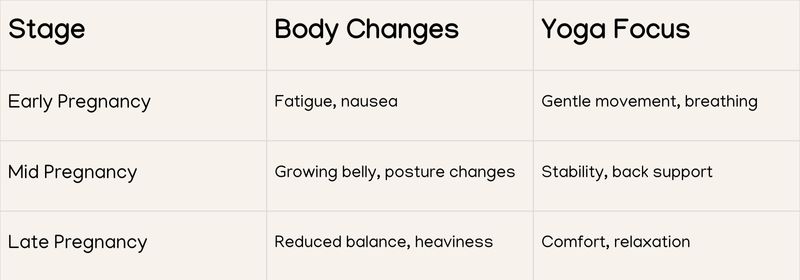
Awareness of trimester-specific needs
Classes are designed to support your body as it is today — not to push it beyond its limits.
Practicing Trimester‑Wise Yoga Online
Online prenatal yoga allows you to follow trimester‑appropriate practices from the comfort of your home. Sessions can be chosen based on how you feel that day, not just how many weeks pregnant you are.
Guided classes help ensure that movements remain safe, supportive, and aligned with your stage of pregnancy.
FAQ
1. Is yoga safe during pregnancy?
For most healthy pregnancies, gentle and pregnancy‑adapted yoga is considered safe. The key is how yoga is practiced, not just whether it is practiced. Yoga during pregnancy should:
Avoid force or strain
Allow space for the belly
Focus on comfort rather than flexibility
Be guided by someone trained in prenatal practices
Always speak to your healthcare provider before starting.
2. I have never done yoga before. Can I start during pregnancy?
Yes, many women begin yoga for the first time during pregnancy. Prenatal yoga is often slower and more supportive than regular classes. It focuses on basic movements, breathing, and relaxation rather than advanced poses.
3. Which yoga poses should I avoid during pregnancy?
Mothers often worry about doing something wrong. In general, pregnancy yoga avoids:
Deep twists that compress the belly
Strong abdominal exercises
Lying flat on the back for long periods (especially later in pregnancy)
Hot or heated yoga styles
Fast or jump‑based movements
4. Is online prenatal yoga safe?
Online classes are very common, especially for mothers who prefer practicing at home. Online yoga can be safe if:
The class is designed specifically for pregnancy
Instructions are clear and slow
You listen to your body rather than copying everything exactly