
Pregnancy does not feel the same from beginning to end. Your energy, your body and your needs change from one trimester to the next, so your yoga practice should change too. This guide walks through each trimester: what your body is going through, what to focus on in yoga, what to avoid, and simple everyday habits that support you.
Key takeaways
- First trimester: short, slow practice and plenty of rest while your body adjusts and nausea or tiredness may be strong.
- Second trimester: energy often returns; gentle strengthening, posture work and supported balance.
- Third trimester: comfort first: supported poses, gentle hip opening, side-lying rest and calm breathing.
- In every trimester: no hot yoga, no strain, space for the belly, and stop if anything feels wrong.
- Check with your doctor before starting, and tell your teacher how many weeks pregnant you are.
Why a trimester-wise approach matters
Each trimester brings different physical and emotional experiences. Energy rises and falls, your centre of gravity moves as the baby grows, and joints and muscles respond differently over time. A fixed routine cannot fit all of that. A trimester-wise practice changes with you, so you feel safe, comfortable and supported at every stage.
How the focus of prenatal yoga changes across pregnancy.
First trimester yoga (weeks 1 to 12)
What your body is going through
- Tiredness and low energy
- Nausea or morning sickness, sometimes dizziness
- Big hormonal changes and stronger emotions
This stage is less about strength and more about saving energy while your body adjusts.
Yoga focus
- Gentle stretching to ease stiffness
- Simple movements that encourage circulation, such as slow arm circles and seated side stretches
- Breath awareness to calm the nervous system
- Short practices with frequent rest; on difficult days, breathing alone is enough
Try this on a tired day
Sit on a chair or cushion with your back supported. Breathe slowly in and out through your nose for two minutes, then gently roll your shoulders and turn your head side to side. Finish with a few minutes of rest. Gentle is enough.
Everyday habits that help
- Small, frequent meals can make nausea easier to manage
- Sip water through the day
- Choose foods that feel easy to digest, and follow your doctor’s advice on diet and supplements
Second trimester yoga (weeks 13 to 27)
What your body is going through
- More energy for many women, and less nausea
- A growing belly and a shifting centre of gravity
- Changes in posture and balance
This is often when movement feels most comfortable.
Yoga focus
- Posture awareness as the belly grows
- Gentle strengthening for the legs, hips and back, for example supported squats with a chair
- Balance work with a wall or chair close by
- Continued calm breathing
Change from now on
From the second trimester, avoid lying flat on your back for long periods. Rest on your side, or sit propped up with cushions. Health guidance links lying flat on the back later in pregnancy with reduced blood flow to the baby.
Everyday habits that help
- Balanced meals with protein, whole grains, vegetables and healthy fats
- Keep drinking plenty of water, especially around practice
- Steady meal times to keep your energy even
Third trimester yoga (week 28 to birth)
What your body is going through
- Heaviness and less mobility
- Shortness of breath as the baby takes up more room
- Lower back or pelvic discomfort
- Changes in sleep
Yoga focus
- Comfort-focused movement, always with props
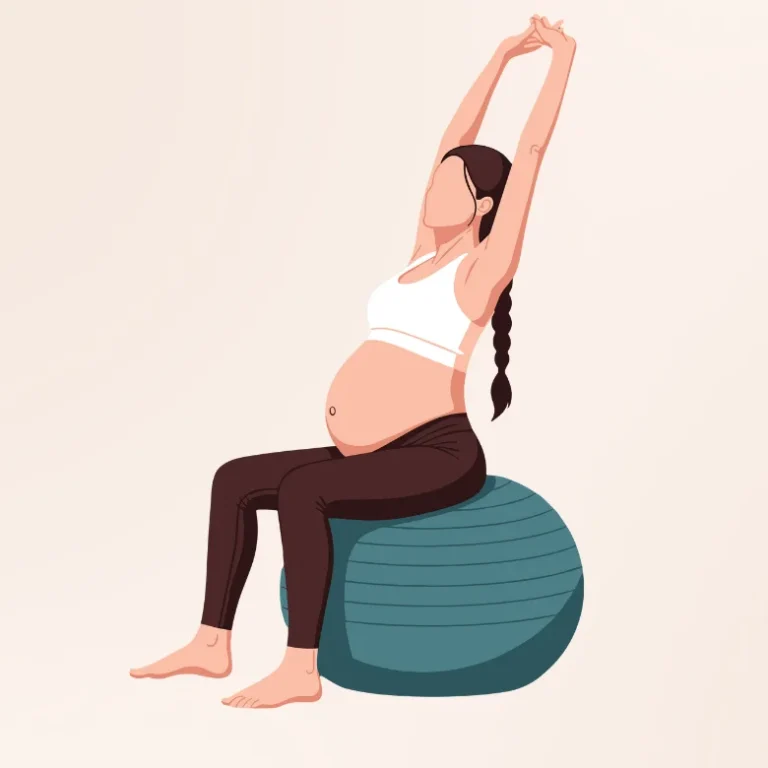
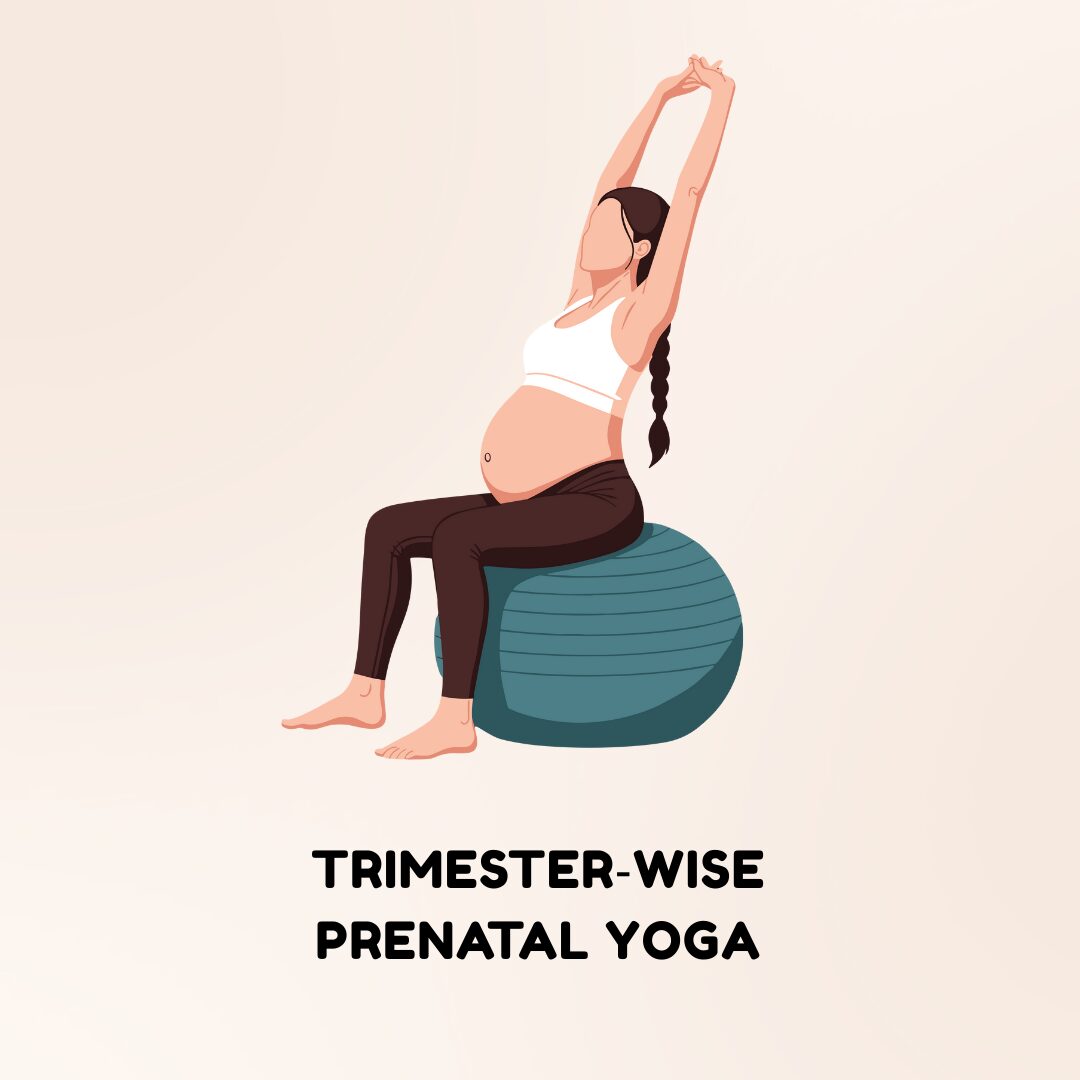
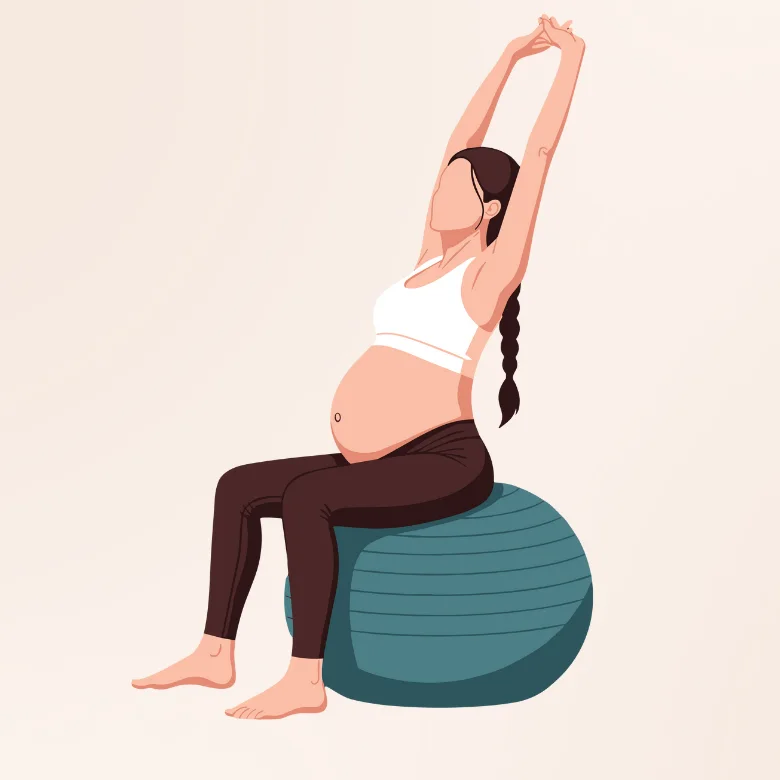
- Gentle hip and pelvic opening, for example slow circles on a birthing ball
- Side-lying relaxation, propped with cushions
- Calming breathing you can use in the weeks ahead
This stage is less about movement and more about rest, awareness and preparation.
Everyday habits that help
- Smaller meals that sit comfortably
- Staying well hydrated
- Resting when you need to, without guilt
What to avoid in every trimester
| Avoid | Why | Try instead |
|---|---|---|
| Hot or heated yoga | Risk of overheating | A comfortable room, light layers, water nearby |
| Deep or closed twists | Compress the belly | Gentle open twists from the upper back |
| Strong abdominal work | Too much strain on the belly | Breathing and gentle pelvic tilts |
| Jumping and fast flows | Balance and joints are changing | Slow, steady movement |
| Lying flat on your back for long (after the first trimester) | Can reduce blood flow | Side-lying or propped-up rest |
| Pushing through pain or breathlessness | Your body is telling you to stop | Rest, and check with your doctor |
Stop and contact your doctor if you notice
- Dizziness, faintness, chest pain or breathlessness that does not settle
- Bleeding, leaking fluid, or regular painful tightening
- Your baby moving less than usual
How trimester-wise yoga supports your wellbeing
Across all three trimesters, prenatal yoga encourages safe, mindful movement, emotional balance, body awareness and time to rest. Paired with nourishing meals and enough sleep, it helps many mothers feel more supported, keep their energy steady and respond calmly to the changes of each stage.
Rather than pushing the body, a trimester-wise practice meets it where it is. At Aerial Divya, Divya adjusts every prenatal yoga class to how many weeks pregnant you are, at the studio in Amritsar and live online.
Frequently asked questions
Is prenatal yoga safe in all trimesters?
Gentle, pregnancy-adapted yoga is generally considered safe in all three trimesters for a healthy pregnancy, when it is guided well and approved by your doctor.
Can I start prenatal yoga in the third trimester?
Many women do. With your doctor’s go-ahead, a gentle prenatal class focused on comfort, supported poses and breathing can be started at any stage.
How long should a session be?
Let your energy decide. In the first trimester even 10 to 15 minutes of breathing and gentle stretching is worthwhile. Many women enjoy longer classes in the second trimester, then shorter, restful sessions later on.
Do I need special equipment?
A mat, a sturdy chair, a couple of cushions or a folded blanket, and a wall to lean on are enough. A birthing ball is useful in the later months.
Sources
This article is general information, not medical advice. Always follow your doctor’s guidance for your own pregnancy.